Interesting article entitled 'The Classical Cloud' by Alex Ross for the New Yorker (can't seem to access it via work's IE6) where he discusses his abiding fondness for CDs over digital music streaming, despite the accumulation of damaging and space-occupying petroleum-produced objects. Among the benefits of CDs he particularly lists the liner notes (the comprehensiveness of which is almost unique to classical music), and how much information they provide that streaming platforms cannot; cover art; the joys in browsing spoines and selecting discs at random, and the memories provoked from seeing an old CD – where it was acquired, where it was most enjoyed, where it has lived and travelled … Spotify is singled out for its poor handling of classical music tracks, mixing up movements, symphonies, confusing artists, etc. Who'd have thought?!
What with classical music’s interest in supporting information (composer and artist biographies, work analyses, performance reviews, instrumental detail, recording dates, locations, libretto, extracts of original scores, etc,), the anorak nature of so many of its more devoted listeners, the need for high definition sonic clarity, and the money and support behind the industry, classical certainly does the CD format better than most genres. I too still value classical CDs more than others, often even over classical vinyl. I recently even bought some, all $5 a pop brand new, or rather still in shrinkwrap but having lingered in the dust filled (now defunct) warehouse of a certain music distributor. I even recalled handling these when working there many moons ago:
James Dillon: Book of Elements (NMC)- dizzyingly complex piano music, with enough strange hooks to cut through the chaos. Dillon was a semi-staple on Dead and Alive, reckon we'd have played more of him if we'd kept at it :
Player Piano 6 - Original Compositions In The Tradition Of Nancarrow (MDG) - Core Dead and Alive repertoire - wonderfully strange sounds from player pianos in post-Nancarrow language, a world I'm obsessed with. Music by Daniele Lombardi, Tom Jonson, Krzysztof Meyer, James Tenney, and interestingly pianists Marc-Andre Hamelin, Stefan Schleiermacher, kind of like writing themselves out of work:
Bernhard Lang: DW (Col Legno) - Using samples and turntables to produce a type of high-brow, refined hauntology; ice-cold and terrifying:
Luigi Nono: Orchestral Works & Chamber Music (Col Legno) - Part of what I always thought looked like Col Legno's "budget sampler" range:
Showing posts with label CDs. Show all posts
Showing posts with label CDs. Show all posts
Thursday, 4 September 2014


Wednesday, 22 May 2013
Listening Limits: Music For Merce

Given the sorry under-played status of most of my boxsets, in both physical and digital formats, and my ongoing disenchantment with digital listening, I’ve decided to introduce a listening project of sorts: listening to the entirety of a digital box set, closely and carefully, before listening to anything else. This only applies to headphones with the portable digital device, but I may try and do something similar with CD boxsets, as there are plenty of those lying about under-appreciated.
So, prompted by rereading - and thoroughly enjoying - a review by Ian Penman of the 10 CD Music For Merce boxset, and given I'm presently reading two John Cage biographies, I'm going to listen to all of Music For Merce. I'll do so chronologically, as presented, from CD1 through to 10 1952 – 2009, but having started and already failed to listen only to Music For Merce, I'll enjoy it slowly, alongside other things but not removing it from the player until it's all properly digested.
And so far so good. I'm up to CD3, and the following have been highlights:
Earle Brown: For Magnetic Tape – Interesting, pockets of primitive electronic tones, surrounded by much silence. First ever electronic dance piece apparently
Earle Brown: For Piano I – Heard just after some Sun Ra it sounded remarkably similar, but slower, with more space, and not as enjoyable.
Morton Feldman: Ixion - a chamber work realised here with two pianos, the restricted tonal palette - all sparse high notes - is welcome after such chanced all-over scatter.
Gordon Mumma: Mesa - David Tudor on bandoneon processed to sound like electric guitar feedback
David Behrman – …For Nearly An Hour… [Excerpt] - Beautifully enunciated female voices reading from Duchamp's writing on his The Large Glass
Pauline Oliveros – In Memoriam: Nikola Tesla, Cosmic Engineer - confusing, flute tones heard throughout an auditorium beside granular electronics, but overshadowed by Tudor and flautist Jean Rigg conversing over how and where such interjections should take place
Christian Wolff: For 1, 2, Or 3 People [Excerpt] - featuring Tudor on baroque organ, processing it into spat bursts of drone
The 'multi-media' approach I've taken to this - listening alongside reading the Cage books and the liner notes (and Penman's review) - I'm finding really helpful, ,as without explanation, much of this can be difficult to penetrate. Perhaps despite Cage's ideals, an understanding of the process and means behind these works' realisations adds much to their reception. Penman is dismissive of the early piano stuff and it is pretty cold and dry, but as historical documents from that ... confused period of composition, furthermore as live performances, there is much to intrigue.
What's missing of course is the dance - aside from those moments when dancers' feet is all we can hear - but Cage and Cunningham were committed to keeping the forms independent. Nonetheless I'm finding myself drawn to youtube for stuff like this:
Monday, 1 April 2013
Listening: John Cage

Reading two books on Cage presently so have been playing as much of his music through the stereo as possible. He is not at all conducive to portable headphone listening. Not always conducive to the strict demands of the home stereo either but there's been sufficient time and place to hear the following:
Stereo

John Cage: Perilous Night and Four Walls, Margaret Leng Tan
Perilous Night is, as the title hints at, rather rackety, while Four Walls, apparently depicting Cage's fraught emotional state before settling down with Merce, is gloomy, with less use of vocals than I expected. Typically with Cage moods are hardly straightforward and 'gloomy' is quite freely drawn. An old Harold Moores relic, pleasantly listened through from start to finish.

John Cage: Early Piano Music, Herbert Henck
Bought cheap off the HMR rep, restricted to playing The Seasons and In A Landscape, the latter more for comparison with Lubimov's version below. Ophelia which follows provides a shocking contrast and is far from Cage-does-Satie.
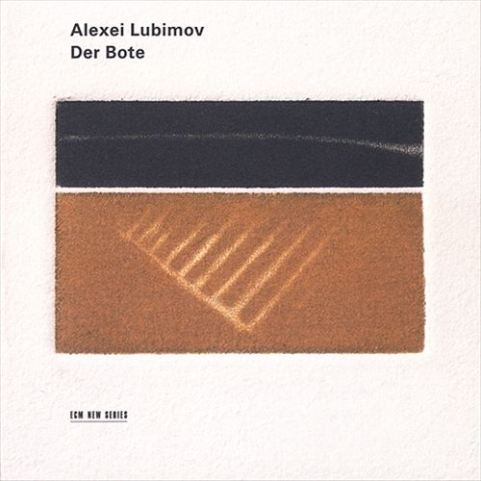
Alexei Lubimov: Der Bote
A home stereo staple from Wesley Classics, bought for In A Landscape which is how I always hear it.

John Cage by Zeitkratzer
Promo and features great sustained droning chamber orchestra performances. Only listened to in part.

John Cage: Thirteen
HMR relic sans case (stolen), features two versions of Thirteen, like the above but even better. Again played only in part.

John Cage: Short Pieces for Prepared Piano
I love the sound of the prepared piano. DLed recently, burnt to CD and heard only in small part.

Victoria Looseleaf: Harpnosis
DLed and burnt to CD, now a home staple. Cage's In A Landscape sits comfortably alongside Satie's Gymnopedies (of course), Claire de Lune and Pachelbel's Canon, all played on harp. Featured on this blog before and just read that a sequel Beyond Harpnosis is available, on casette only but the original you'll find easily on the web and in fine shape.
All these In A Landscape's have prompted me to try and play it on the piano, which is proceeding slowly. Not very difficult but long, and my reading is crap. I first heard the piece on a Mini Disk given me in Japan by Velvet Hands, in the pre-download MD trading days, and was a sucker immediately. It was aural balm between all the Autechre and Skam discoveries.
Portable/Digital

John Cage Shock
Doubtless these sound and look great on vinyl but music is lost on mp3 through headphones. Not quite all, there's some delightful and very live setting recordings here, where the novelty and 'shock' does translate and is audible, but the grubbiness and chaotic sense of space is poorly suited to commute listening. I ought to whack it through the mixer and hear it proper like but time and energy will prevent it. Good review in The Wire and elsewhere.

Music For Merce
Mammoth set of recordings by mostly Cage associates but again, plenty of haze and fluff and misses the extensive notes, images, packaging etc. that came with the proper release. Great Wire review for this too and worth spending much time with, but not on headphones commuting.

John Cage: Ryoanji
Odd music this, defined by a repeated percussive bang which persists throughout, around which other elements dart about, very Japanese-like. Very interesting and the restricted tonal palette works just fine through headphones. Fourteen appears on the Zeitkratzer CD and not yet played Ten.

John Cage: 12‘55.6078
Wonderful box set this, 12 CDs covering the Donaueschingen Festival - 75 Years: 1921-1996, picked up gratis sans cases. A regular Dead and Alive staple, I played this early recording on the portable digital device, a piece for piano and trinkets (?) filled with humorous whirrs and pings, with good input from audience in the form of laughter and jovial heckling, which Cage doubtless enjoyed. The old recording does no wonders but the mirth is palpable.
Sunday, 24 March 2013
Listening - 25 March 2013

Oddly traveled to work by work car this morning and listened to 45 minutes of Per Bojsen-Moller's Curator's Cuts 28 for Little White Earbuds, burnt to CD for the car stereo. Was good, with slow tempo, calm tones and regimented 4/4 suited to Monday morning's headache and sluggishness. Had zero interest in music at this hour but this helped bring me round. Good start with Madteo:
Much as I enjoyed it I'm not sure I'll bother hearing the rest of this set. Had burnt this to soundtrack a long road trip and figured the air-break tracklistings to be useful, but now that the trip is over... interest has waned.
Listened to no music at my desk, as usual. Tried unsuccessfully to play a few things on the portable digital music device while walking about at lunch but headphones were stuffed (dodgy work in-ear cheapies). Heard snippets of R.E.M. from their I.R.S. Years, skimmed through Autechre's Chichli Suite and Lee Perry's Disco Devil but all sounded too shit to bother with.
This is the problem with portable music all too often, along with the interface being too user unfriendly to engage with, and yet for many (including myself) this is the primary means of listening to much music. And this is a factor in commencing the Listening Series, to try and bring some sense of active engagement to these driftless and passive and largely (presently) unenjoyable activities.
The weekend's listening highlight was several airings of the Delos CD Perchance to Dream to soothe a sick child, played through the living room stereo at modest volume. This was acquired through warehouse in Soho Square, where masses of abandoned Delos and Hanssler CDs were stored. My daughter calls it "the magic CD" and isn't the only one:
Just last week my nephew Karl sent me a quote from Danielle, a friend of his from school days, about her experiences with “Perchance to Dream” and its sequel:
“I had something I wanted to share with you should you ever pop up on my radar again. So, through all of these years, I never forgot that I had the opportunity to meet your Aunt Carol and how cool I thought it was that she’s a concert pianist.
“I thought you might like to know that in my son’s 5-1/2 years on this planet, he’s probably gone to bed at night fewer than thirty times without listening to one of her CDs. I would say that Nicholas is likely her biggest fan. I forgot to bring the CDs with us to Hilton Head last week and heard an earful because of it! I’d better get that stuff on my iPod STAT.
“I purchased “Perchance to Dream” first when I was going through a particularly rough time in the early 90s and was looking for something to help me relax (short of fist-fulls of Xanax!). I liked it so much that I purchased “Such Stuff as Dreams,” too. When Nicholas was born, I was looking for something other than Disney to play him at bedtime. The rest, as they say, is history.
“Anyway, the next time you speak to her, let her know her #1 fan is a 5-year-old boy in metro Atlanta. She might get a chuckle out of it.”
Perchance to Dream: A Lullaby Album for Children and Adults is the only CD I own to feature contrasting covers for adults:

... and children:

Subscribe to:
Posts (Atom)