Showing posts with label Vinyl. Show all posts

Wednesday, 4 February 2015

Thomas Mann - The DJ in 1924


Just finished Thomas Mann's The Magic Mountain and was surprised by an early reference to record playing, and the manner in which it posits the record player (the person, not the instrument) as an active performer, i.e. a DJ.

In it the protagonist, Hans Castorp, is recovering in a tuberculosis sanitorium in the Alps, which seems more like a restful snowy resort than a hospital, and the establishment acquires a gramophone and a collection of records. Hans Castorp is most taken with the device and takes it upon himself to learn its workings and discover its joys:
He made himself acquainted with the new possession, and worked in undisturbed enjoyment through the contents of the heavy albums. There were twelve, in two sizes, with twelve records each; many of the flat, round, black disks were inscribed on both sides, not only with the continuation of a piece of music, but also because many of the plates held two distinct records. Here was a world to conquer, large enough that even to survey it was a difficult task at first, and bewildering; yet a world full of beautiful possibilities. He played some twenty or thirty records; using a kind of needle that moved softly over the plate and lessened the sound, in order that his activity might not offend the silence of the night. But twenty or thirty were scarcely the eighth part of the riches that lay asking to be enjoyed. He must be content tonight with looking over the titles, only choosing one now and again to set upon the disk and give it voice. To the eye one was like another, except for the
coloured label in the centre of each hardrubber plate; each and all were covered to the centre or nearly so with concentric circles; but it was these fine lines that held all imaginable music, the happiest inspirations from every region of the art, in choicest reproduction.


Later Mann describes Hans Castorp's active role as player of records, classifying Castorp as a 'performer', and defined against that of the 'audience':

Later in the day, after the noon and evening meals, he had a changing audience for his performance—unless one must reckon him in with the audience, instead of as the dispenser of the entertainment. Personally he inclined to the latter view. And the Berghof population agreed with him, to the extent that from the very first night they silently acquiesced in his self-appointed guardianship of the instrument. They did not care, these people. Aside from their ephemeral idolatry of the tenor, luxuriating in the melting brilliance of his own voice, letting this boon to the human race stream from him in cantilenas and high feats of virtuosity, notwithstanding their loudly proclaimed enthusiasm, they were without real love for the instrument, and content that anyone should operate it who was willing to take the trouble. It was Hans Castorp who kept the records in order, wrote the contents of each album on the inside of the cover, so that each piece might be found at once when it was wanted, and “ran” the instrument. Soon he did it with ease and dexterity.

Here Mann captures many of the features of the modern DJ - 'guardian of the instrument', 'keeping the records in order' - essentially the selecta! - and running the instrument 'with ease and dexterity'. This in 1924!

Here's the marvellous Paul Scofield, of Patrick Keillor renown, reading the text:

Wednesday, 3 April 2013

Listening: 1 April 2013, Giegling


Spent the early hours of the beginning of April playing records, primarily the Giegling Futur II collection and various records in a similar guise. Mnmlssgs raved about the label, especially Kettenkarussell and their outstanding long mix (that seems no longer to be available...?), and Giegling remains incredibly consistent, not rocking any boats but doing a steady thing very well indeed. There seems to be a few sides to their sound (granular-ambient hip-hop, granular-ambient techno) but what I favour most is the granular-ambient house, an early-Dial-esque subdued minimal deep hazy thing typified by Kettenkarussell, and of which there's great examples on Futur II:


Traumprinz aka Prince of Denmark is a Geigling regular and just put out Say or Do, his third 12" for his own Traumprinz label, and it's a doozy. The title track is fine, indeed they all are, but none better than 'Changes', which would have me gloriously melting if heard in discotheques:


He's doing similar things on 'Freedom' from Traumprinz 1 though not quite so euphorically:


And here's a fine mix from Traumprinz as Prince of Denmark from the Giegling website:

Tuesday, 5 June 2012

Cheap Classical Records


I've spoken before about the joys to be had shopping for classical vinyl. You’re in a world of your own in most shops, scrounging through unorganised bundles of dusty $1 and $2 items, usually stored on the floor, in milk crates, under the racks of more marketable fare. It can be hard on the knees, unless you get to sit down, on an old chair or a box, as I did last week in my most recent haul. There’s perhaps more outright crap to wade through – bulky Reader’s Digest boxes, misplaced 1970s easy listening crooners and unloved sleeveless discards – but its also easy to find gems, even in charity shops.

Here’s what I just picked up:

Schubert - Selling in China for an absurd $120.


I discovered a recent fondness for the harp after hearing Cage’s wonderful In A Landscape played on harp by Victoria Looseleaf, on her album Harpnosis (he he, also includes great versions of soothing modal classics by Satie, Debussy etc.) Also heard a surprisingly pleasant Harpo Marx recording - DL here, low-fi, but better than you’d expect. The cover on mine is Part 2 of a budget Record Club thing not featured online. I passed on Volume 1.


I have a good recording of this by the Australian Chamber Orchestra on hybrid SACD I got for free, but it takes too long to read on my non-super CD player. Check the blurred photo


These guys are old champs


Vaguely surrealist cover for kooky Gould (and stern Schoenberg), I stretched to $6


One of DGs all time best sellers. I still don't understand the cover


Nice cover art on all these, yet strangely not related by label


Only link I could find to Soviet recording of the Shostakovich piano quintet and Stravinsky’s Three Pieces for String Quartet by the Borodin Quartet with Ljubow Edlina on Melodiya Eurodisc is a red herring to here


To sit unplayed with my other 10”s


Wednesday, 12 October 2011

Annual Eighties Compilations


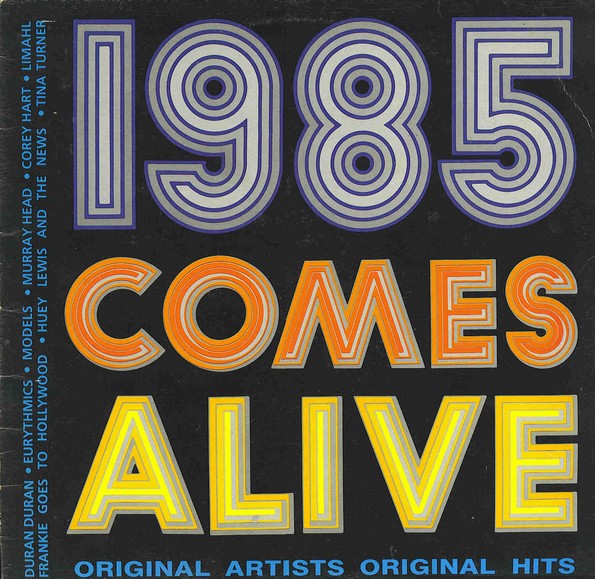
Like most of my vintage I grew up on 1980s pop compilations, and you can pick them up pretty easily in charity shops nowadays on both LP and cassette. Doubtless the latter graces all manner of low-fi synthesist-hypnagogues shelves and car glove compartments, but I opt for the vinyl. I found some beauties yesterday in the Moonee Ponds Arthritus Foundation Op Shop: 1980 The Summer and 1985 Comes Alive - $1 a piece.
The former demonstrates that they hadn't quite nailed the rhyming title theme yet, and the track selection is more slapdash, with MOR folk-rock alongside what-would-become the established synth-pop norm, and plenty of utter bilge: John Farnham's 'Help' chief among these. Worth mentioning for non-antipodeans oblivious to his unique brand of grandma-appealing dross. Youtube features dozens of clips of Farnsey performing this, which I thought bizarre, until I recalled seeing dozens of performances myself on telly, usually on Hey Hey It's Saturday:


But the hits hit hard. Diana Ross's 'Upside Down' is surely among the grooviest tracks ever made, and I'd bought more than one Best Of searching for it in vain, settling for early greats like 'Reflections' and 'Love Child'. Here she is in 1980 with doppelganger Michael Jackson:


Good but inferior version by Carol Cool, from Soul Jazz's Hustle! Reggae Disco comp:


Also features Korgi's easy one-hit favourite 'Everybody's Gotta Learn Sometime', this clip a slightly warped video take:


Popularised for modern types by The Field:


'Let's Get Serious' by 'lesser' Jackson Jermaine:


By 1985 the genre of annual pop compilations was firmly established and 1985 Comes Alive is among the finest examples. Synth pop was pop music's lingua franca, and artists were adept at injecting real emotional weight into three minute throwaway ditties. I picked it up for Murray Head's 'One Night in Bangkok' (discussed below), rightly critiqued by Floatinghead for it's Middle Eastern fetish(?!), and what's with all the chess references??? I've clearly not paid attention to all the lyrics, perhaps there's a story there? But each time I'm sucked in by those eerie synth shudders and I'm overtaken with weird eighties pop bliss.

The same confused euphoria is derived from these babies:


Didn't realise this featured Moroder, but after watching the film again last week it's obvious:


Th rest is more humdrum - Huey Lewis, Tina Turner, Pat Benatar, U2 for fuck's sake, the nadir being this big-downunder comedy blip from Cuban-born Jewish Romanian George Smilovici:
.

I also bought the 12" single for Rick Astley's 'Never Gonna Give You Up' which features the instrumental version on the flip. Many claim to hate this song but 39 million youtube views say otherwise. Right after paying for it I entered Moonee Ponds Shopping Mall and what was to come on the muzak channel but...


Am I alone in succumbing to delusions of solipsism when coincidences of this nature take place?

Thursday, 8 September 2011

Peter Kersten Appreciation

The previous post on Lawrence's Timeless was not intended as a criticism of the work itself or of his mixing and selection, both of which were rather good, but of the medium itself. Mix CDs are dead, time to shovel on the dirt, Timeless it 'aint.

The twelve inch vinyl record however lives on, and stronger than it's been in a long while. Since wifey and I have started our exclusive listening practice I've been buying more of it, and am especially keen on the archival mystery and bargains to be had in secondhand shops. Beyond the classical dregs you can occasionally find cheapish house and techno nowadays, a sure sign that it's grown old and crusty. Nothing looks worse than old dated house and techno records (aside from progressive house and trance ones, and Nana Mouskouri), but the good stuff still looks good, and its interesting what has aged gracefully (and what hasn't).

Peter Kersten's Sten alias offered a harder, more Detroit angled techno version of the Lawrence sound, more bleeps and less chimes and crackle, but retains the same downbeat gloom. I reviewed his Essence LP for RA some moons ago and was largely unimpressed, but I've found a couple of 12"s for $5 or less and they're great. A slightly dated mnml structure but the drums are far from. 'Sponk' is quite agressive, with gruff Auftrieb-esque pulses along with the typical sinuous linearity:


Also picked up Restless/Frost:


His best track however is 'Faces' from 2004's badly titled and patchy Sender comp, Receiving Data... Ah It's Coming!, a dark pseudo acid Detroit stomper:


I thought that was it for Sten, but he returns on the forthcoming Laid release Never As Always with two dubs of Lawrence's 'Rise', a staple of recent Carsten Jost sets.


But Lawrence has really been pumping out the quality of late, for Smallville, Laid, Dial and Mule Electronic, my pick of which is 'Treacle Mine' from Dial's 2010, with that staggered cascading thirds offbeat thing going:


Lawrence tracks, and indeed much of the Hamburg bunch, epitomise the kind of subdued, downbeat and cosy deep house I love right now, a kind of comforting sound, almost ambient, files nicely alongside Terre.


Monday, 29 August 2011

Internet Voids

When I used to work in classical music retail (2003-7) it wasn't always easy to find references to specific recordings on the interweb, particularly if it was old vinyl. Then, such absences were frustrating, and such was my faith in the web's omniscience that it had me doubting the existence of the real object (cue dismissive attitude to eager customer). Now if such a thing occurs it's so rare as to be exciting, discovering a fissure in the system, and seems somehow subversive, illegitimate, spectral... There's a covert pleasure to holding something in your hand which does not (yet) exist in webworld: music not downloadable, books not for sale, events unmentioned, photographs not jpegged... The 'Universal Library/Celestial Jukebox/Datacloud' is constantly expanding, almost faster than history is moving, and one shudders at the thought of it somehow someday eclipsing its real shadow, but for now these gaps remain.

Simon Reynolds speaks on this in Retromania:
...'Everything that has ever happened is available, all at once, all around us'... a vast cultural database containing every book and magazine article ever written, in all languages, and eventually every movie/TV programme/cultural artifact EVER.
But these cracks are being covered over, the Wikipedia/Googlemaps/Ebay/Discogs/Amazon steamroller streamrolling unstoppably onwards, ensnaring all of cultural history within its web. Strange too that the ensnaring is done largely and willingly by us, driven by a stupid self-willed urge to catalogue.

A recent record shopping expedition turned up a few unmentioned relics: some mail order classical releases with surprisingly high-calibre personnel involved; a French-issued Satie LP, reissued on CD but this pressing a mystery; John Field on an unknown and unrepresented Irish label. Struck by their online absence, I instinctively went for a camera to photograph and document, to 'put right'. Why? What forces us to add to the completion of the online archive? I have them right before my eyes! I can listen to the grooves! There is absolutely no need for mp3 versions or jpegs of album covers!

We should clutch at these occurrences as they won't last. We are experiencing this void. It will be filled.

Needless to say the voids I discovered will remain voids (and I urge others to keep discoveries of similar voids to themselves), but here's what I found that was legitimate:

One of Karajan's numerous adagio collections

Boulez doing Ravel vocal

Looks like a fifties country singer of the Chet Atkins/Eddy Arnold type

Tired Chopin hits

Steal - early modern masters for $2

Nice - pastoral English music with more bite than I'd expected

Pretty-but-spineless flute bonbons

Like Greensleeves, yet part of an old record club incompletely detailed online. Note the eighties wine bar font

The Argo logo here resembles Kompakt's Auftrieb. I like that this advertising photograph by professional online record dealer is so obliterated by easily avoided glare

Snappily-dressed Hungarians play Schubert (very well). They're in casual attire on the back, but as it's not online you'll have to track down the record to see it

I covered the title track with pal Benedict Moleta, downloadable here. Also produced a very shaky 'Spatial Dub', here.

Double LP for $1 of guitar music from around the world by Aussie virtuoso Williams, featuring an excellent transcription of a Japanese piece. The cover I have is much better, featuring a mock cross-stitch image of a guitar head, but no one has posted it online (ha!)

Can stop listening to a shitty mp3 version now of 'Can You Feel It'. On vinyl it revealed instruments and passages never-before-heard on grainy digital.

Marc Romboy predating the current Jack revival, and Steve Bug's titular remake, by 6 years.

And I almost bought the CD


Thursday, 18 August 2011

Recorded Music in the Digital Age

For me, much of the joy in listening to recorded music, particularly acoustic music, has to do with hearing the recording process itself, acknowledging - celebrating even - its artifice, self-referentially incorporating this process into the finished product. This is why records are such a rich medium: the noise of needle on vinyl is inescapable and intrinsic to vinyl playback.

The Hi-Fi phenomenon of the twentieth century was obsessed with noise reduction, a 'problem' which seems to have been largely mastered (pardon the pun) by the advent of digital recording and CDs. Or, more likely, no one cares anymore in the frenzied everything-for-free fileshare deluge, heard as low bitrate MP3s through little white earbuds or computer speakers. I'll moan about some of the other issues with MP3s at another time, but the sound quality alone is enough to champion vinyl, or CDs even. Since we've gone all-vinyl at home I find even CDs sound shit, and now view digital files purely as the 'reviewing tools' argued by music giveaway blogs. I'm a prolific 'previewer' of digital files, I'll admit, but I feel less guilty about it now.

This hot issue has kicked off a regular series in The Wire featuring various arguments on digital music and quality, value, storage, listening habits, etc, and its been interesting to follow. I feel strongly that musicians need to get paid, but I also feel that policing the ceaseless flow of stolen music on giveaway blogs is an impossible task and one that now its too late to start trying to enforce. As one side of the argument has articulated, the landscape has irrevocably changed and the past cannot be recaptured. Given this, that the initial shock over music freely available everywhere online has passed, we've reached a kind of plateau and something has been realised: there exists a demand for quality music releases on physical formats, and that some people are willing to pay for music in these forms.

The issues here lie around the idea of 'quality', and the volume of music that people are willing to pay for versus the volume of music they want to acquire and listen to. The quality argument came up at mnmlssgs and by Stefan Goldmann at LWE, and touched on in varied forms by countless others, and cannot be overstated - given the saturated market we find ourselves in, and the lack of financial reward available to most music producers, its more difficult than ever to create original music work of high quality and have it recorded and released to a high standard. I'd argue that this is less of a problem in certain genres, particularly classical (and I'll post about that soon), but in most areas of music there's complacency and tedium from the many issues that digital music has raised.

As for how much people are prepared to pay for music, this area will continue to be defined as time passes within this situation, ie as those listeners prepared to pay AT ALL for music begin to cement their spending habits in this age. I still buy far more music on vinyl than I need/ought to, but never as much as I'd like to. I also trawl charity shops for bargain records, something no one aside the charities benefits financially from, but given that most of the people involved in the production of the record are long dead, who cares?

I also download a lot of music, scan, promptly forget and/or abandon in search of the next new cheap hit. This seems symptomatic of current music consumption habits, that given the lack of investment, in all senses, in music downloaded and skimmed through portable devices, music consumed in this way can only be heard cursorily. This practice is wearying, causing exhaustion and depression (and guilt), but can be corrected. Sit back in your listening space, turn on the stereo, dust off some records, have some people over, play whole albums, talk about them, let them lead you to other records, study the covers, read the notes, buy some more ...

Sunday, 17 July 2011

Cheap Vinyl


One of the perks of being a fan of classical music, aside from the implicit knowledge that you are smarter, more sophisticated than and superior to non-classical listeners, is that classical records are dirt cheap in most record stores. My boss is away - an extreme rarity - so I hopped on a tram to Fitzroy Hipsterville and visited some record shops. First up was Northside Records, known for their soul-jazz-funk-hip-hop, had some good stuff at acceptable prices, including Motor City Drum Ensemble's "Monorail" double 12" for $26, a bargain round these parts, and were I more flush I'd have picked it up.


...with John Roberts, usually boring but this is good:


But not as good as the Hundred20 old-skool tracks:


I also thought it would make me look cool next to the bundle of bottom shelf $2 clutter I actually bought:

Beethoven Piano Concerto #5, Wilhelm Kempf, old pressing

Berg, Schonberg, Webern - Those dudes don't know the gold they're sitting on - Second Viennese School for 2 bucks!!!

Debussy: Prelude etc. Nice Rousseau cover

Mussorgsky: Pictures, probably never listen to this, I think I find it annoying, but maybe the Ravel will get an airing.

Dexter in France. Could be in poor shape, their jazz collection was generally more highly regarded, and costlier.

It being 2011 and record stores a different beast these days, the owner shmoozed me, asked me my taste in electronic music (flustered, I said "house and ambient") and pulled out full-price recommendations to hopefully snag more of a sale. I'm probably being cynical though, if they've made it this far they're probably safe. His interest sagged when I asked whether he had any classical music, replying "down in the $2 bin". Bonanza!

Ten bucks lighter but five records heavier I strolled around the corner to the The Searchers book & record exchange. Less disregard shown for classical, stored above ground and in the same racks as rock, pop, hip-hop etc, but here they went as low as $1. I bought this:

Adams and Reich. Never really liked Adams but the Reich is good, and minimalism on vinyl always welcome, in some vain hope I'll someday mix with it

Debussy Images etc. Add more yellow to the sides of the casette image below for what the vinyl looks like.

Vivaldi chamber music. Hadn't really seen Hyperion LPs, they look identical to their CDs.

Beethoven by the Menuhins.

Mine is an EMI HMV LP with Arnodl Bocklin's "Ein Fruhlingstag" on the cover

Mozart Clarinet Concerto, from the recording below, but mine is a 10" without the horn work, on Decca, with a reproduction of an uncredited Dutch outdoor tavern scene on the cover. The previous owner was named "Bennett" and they bought it 17 April 1964, according to the sticker in the corner.

Felt ok with Steve Reich in the pile but purchasing anything valued at $1 is a degrading experience. The look I received from the clerk, not dislike but utter disinterest, was revealing: I'm too old to look young and cool listening to Vivaldi, especially in my work strides; now I resemble the 100% classical penny-pinching cranks I used to serve at Harold Moores.