Showing posts with label John Cage. Show all posts

Wednesday, 22 May 2013

Listening Limits: Music For Merce


Given the sorry under-played status of most of my boxsets, in both physical and digital formats, and my ongoing disenchantment with digital listening, I’ve decided to introduce a listening project of sorts: listening to the entirety of a digital box set, closely and carefully, before listening to anything else. This only applies to headphones with the portable digital device, but I may try and do something similar with CD boxsets, as there are plenty of those lying about under-appreciated.

So, prompted by rereading - and thoroughly enjoying - a review by Ian Penman of the 10 CD Music For Merce boxset, and given I'm presently reading two John Cage biographies, I'm going to listen to all of Music For Merce. I'll do so chronologically, as presented, from CD1 through to 10 1952 – 2009, but having started and already failed to listen only to Music For Merce, I'll enjoy it slowly, alongside other things but not removing it from the player until it's all properly digested.

And so far so good. I'm up to CD3, and the following have been highlights:
Earle Brown: For Magnetic Tape – Interesting, pockets of primitive electronic tones, surrounded by much silence. First ever electronic dance piece apparently
Earle Brown: For Piano I – Heard just after some Sun Ra it sounded remarkably similar, but slower, with more space, and not as enjoyable.
Morton Feldman: Ixion - a chamber work realised here with two pianos, the restricted tonal palette - all sparse high notes - is welcome after such chanced all-over scatter.
Gordon Mumma: Mesa - David Tudor on bandoneon processed to sound like electric guitar feedback
David Behrman – …For Nearly An Hour… [Excerpt] - Beautifully enunciated female voices reading from Duchamp's writing on his The Large Glass
Pauline Oliveros – In Memoriam: Nikola Tesla, Cosmic Engineer - confusing, flute tones heard throughout an auditorium beside granular electronics, but overshadowed by Tudor and flautist Jean Rigg conversing over how and where such interjections should take place
Christian Wolff: For 1, 2, Or 3 People [Excerpt] - featuring Tudor on baroque organ, processing it into spat bursts of drone

The 'multi-media' approach I've taken to this - listening alongside reading the Cage books and the liner notes (and Penman's review) - I'm finding really helpful, ,as without explanation, much of this can be difficult to penetrate. Perhaps despite Cage's ideals, an understanding of the process and means behind these works' realisations adds much to their reception. Penman is dismissive of the early piano stuff and it is pretty cold and dry, but as historical documents from that ... confused period of composition, furthermore as live performances, there is much to intrigue.

What's missing of course is the dance - aside from those moments when dancers' feet is all we can hear - but Cage and Cunningham were committed to keeping the forms independent. Nonetheless I'm finding myself drawn to youtube for stuff like this:

Monday, 1 April 2013

Listening: John Cage


Reading two books on Cage presently so have been playing as much of his music through the stereo as possible. He is not at all conducive to portable headphone listening. Not always conducive to the strict demands of the home stereo either but there's been sufficient time and place to hear the following:

Stereo

John Cage: Perilous Night and Four Walls, Margaret Leng Tan

Perilous Night is, as the title hints at, rather rackety, while Four Walls, apparently depicting Cage's fraught emotional state before settling down with Merce, is gloomy, with less use of vocals than I expected. Typically with Cage moods are hardly straightforward and 'gloomy' is quite freely drawn. An old Harold Moores relic, pleasantly listened through from start to finish.


John Cage: Early Piano Music, Herbert Henck

Bought cheap off the HMR rep, restricted to playing The Seasons and In A Landscape, the latter more for comparison with Lubimov's version below. Ophelia which follows provides a shocking contrast and is far from Cage-does-Satie.


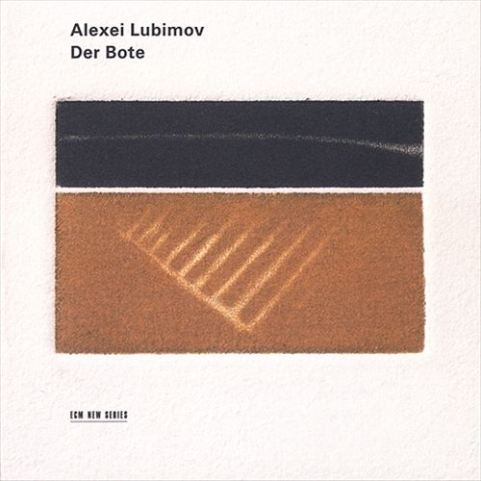
Alexei Lubimov: Der Bote

A home stereo staple from Wesley Classics, bought for In A Landscape which is how I always hear it.


John Cage by Zeitkratzer

Promo and features great sustained droning chamber orchestra performances. Only listened to in part.


John Cage: Thirteen

HMR relic sans case (stolen), features two versions of Thirteen, like the above but even better. Again played only in part.


John Cage: Short Pieces for Prepared Piano

I love the sound of the prepared piano. DLed recently, burnt to CD and heard only in small part.


Victoria Looseleaf: Harpnosis

DLed and burnt to CD, now a home staple. Cage's In A Landscape sits comfortably alongside Satie's Gymnopedies (of course), Claire de Lune and Pachelbel's Canon, all played on harp. Featured on this blog before and just read that a sequel Beyond Harpnosis is available, on casette only but the original you'll find easily on the web and in fine shape.

All these In A Landscape's have prompted me to try and play it on the piano, which is proceeding slowly. Not very difficult but long, and my reading is crap. I first heard the piece on a Mini Disk given me in Japan by Velvet Hands, in the pre-download MD trading days, and was a sucker immediately. It was aural balm between all the Autechre and Skam discoveries.

Portable/Digital

John Cage Shock

Doubtless these sound and look great on vinyl but music is lost on mp3 through headphones. Not quite all, there's some delightful and very live setting recordings here, where the novelty and 'shock' does translate and is audible, but the grubbiness and chaotic sense of space is poorly suited to commute listening. I ought to whack it through the mixer and hear it proper like but time and energy will prevent it. Good review in The Wire and elsewhere.


Music For Merce

Mammoth set of recordings by mostly Cage associates but again, plenty of haze and fluff and misses the extensive notes, images, packaging etc. that came with the proper release. Great Wire review for this too and worth spending much time with, but not on headphones commuting.


John Cage: Ryoanji

Odd music this, defined by a repeated percussive bang which persists throughout, around which other elements dart about, very Japanese-like. Very interesting and the restricted tonal palette works just fine through headphones. Fourteen appears on the Zeitkratzer CD and not yet played Ten.


John Cage: 12‘55.6078

Wonderful box set this, 12 CDs covering the Donaueschingen Festival - 75 Years: 1921-1996, picked up gratis sans cases. A regular Dead and Alive staple, I played this early recording on the portable digital device, a piece for piano and trinkets (?) filled with humorous whirrs and pings, with good input from audience in the form of laughter and jovial heckling, which Cage doubtless enjoyed. The old recording does no wonders but the mirth is palpable.


Thursday, 21 June 2012

Erik Satie, John Cage and Furniture


Fascinating article by Matthew Shlohmowitz on Cage and Satie found at Satie Archives. Shlohmowitz examines the degree to which our current understanding and reception of Satie is due to Cage. He begins by stating that if it wasn't for Cage, Vecations, arguably Satie's most well known and influential work, might never have been discovered, let alone performed:

Before Cage discovered the piece (Vexations) in 1949, few knew that it existed. This claim is easily supported: the first two biographies on Satie (by Templier,1932; Meyers, 1948) make no mention of it, not even in the "catalogue of works" of Meyers's book. Soon after he discovered the score, Cage had it printed in Contrepoints. Furthermore, and of even more significance, in New York in 1963, Cage organized the work's premier performance, seventy years after it was composed! Vexations is now one of Satie's most famous pieces. It has been performed many times all over the world; equally, a literature on it has developed. Testimony to this development, is that even the shortest articles about Satie in music dictionaries make mention of it.


From a 1969 performance by mini-Eric Idle-alike:


... and later John Cale performing it on a game show on telly:


A 9 hour 'complete version exists here, in very low bitrate.

Shlohmowitz also talks of Cage's understanding of musical structure, which he articulated only in relation to the music of Satie and Webern, as opposed to that of Beethoven (and everyone else):

Cage states that many new materials have emerged in the twentieth century: quarter tones (Haba); electronic instruments (Varese); and the prepared piano (himself) to name just a few. Cage sees the big development in methodology as the ability to create "continuous invention", be it through "means of the twelve-tone row" or "secundal intervallic control". And he states that there is a "new contemporary awareness of form: It is static rather than progressive in character." When it comes to structure, however, as we have said, Cage believes that there is has been only one new idea since Beethoven. He writes:

"And that new idea can be perceived in the work of Anton Webern and Erick Satie. With Beethoven the parts of a composition were defined by means of harmony. With Satie and Webern they were defined by means of time lengths. The question of structure is so basic, and it is so important to be in agreement about it, that one might ask: Was Beethoven right or are Webern and Satie right? I answer immediately and unequivocally, Beethoven was in error, and his influence, which has been as extensive as it is lamentable, has been deadening to the art of music."

Cage believed that the "fundamental" aspect of music is duration. His argument is that the only "characteristic" which both sound and silence share is duration. Silence is important, as it is the opposite of sound "and, therefore, a necessary partner of sound."


Cage's interest in Satie led him to Paris where he sought more information on Satie and Milhaud's musique d'ambleument, 'furniture music', or more accurately, as I recently learned, 'furnishing music'.

In 1949 Cage went to Paris with a grant to do some research on Satie. He was particularly interested on this research trip on finding out more about musique d'ameublement (Furniture Music). In collaboration with Milhaud, Furniture Music is best explained by the creators:

"We are presenting today for the first time a creation of Messieurs Erik Satie and Darius Milhaud, directed by M. Delgrange, the "musique d'ameublement" which will be played during the intermissions. We urge you to take no notice of it and to behave during the intervals as if it did not exist. This music, specially composed for Max Jacob's play claims to make a contribution to life in the same way as a private conversation, a painting in a gallery, or the chair which you may or may not be seated. You will be trying it out. MM. Erik Satie and Darius Milhaud will be at your disposal for any information or commissions."

Furniture Music was the first ever "Muzak"; as Milhaud wrote, "Satie was right: nowadays, children and housewives fill their homes with unheeded music, reading and working to the sound of the wireless. And in all public places, large stores and restaurants, the customers are drenched in an unending flood of music. It is 'musique d'ameublement', heard, but not listened to". And although today it disturbs many of us that Muzak is so ever present (that it is the soundtrack to our lives), in the 1920s this was a revolutionary idea. For Cage, Furniture Music was important, as it was a new context for music, and a context that broke from the traditions of the concert hall. It was also important in a way that Satie had not conceived. Namely, for Satie, Furniture Music would be a part of the sounds of the environment, whereas for Cage, the noise of the environment are the music. This manifested itself in Cage's work the empty spaces that are incorporated into many of Cage's works during the 1950s. The best example of this is 4'33".


'Children and housewives'?! Not all menfolk sit in their living rooms listening to Brahms and Wagner!

Satie's Furniture Music pieces are among his strangest and most charming works, pithy melodies drawn in strings and woodwind, looped into go-nowhere repetition, yet too kooky, even today, to satisfy their creators' demands for ignorability.


Oddly they remain largely unknown, with only one commercial recording in existence, of only three of the five works (Part 1:Tenture De Cabinet Prefectoral (Curtain of a Voting Booth), Part 2: Tapisserie En Fer Forgel (Tapestry of Wrought Iron: for the arrival of the guests - grand reception - to be played in an entrance hall), and Part 3: Carrelage Phonique (Phonic Tiles - may be performed at a luncheon), by the Ars Nova Ensemble under Marius Constant on an Erato LP, along with an excerpt of Vexations and the short trumpet fanfare Sonnerie pour réveiller le roi des singes (Trumpet call to awaken
the kind of the monkeys, who sleeps with one eye open). It has been reissued on a budget APEX CD, alongside the equally unknown Concerto for Trautonium and Strings by Paul Hindemith. This remains one of my most frequently played CDs.


For those who can't be bothered with the CD the Satie works are all freely available to download at Ubuweb.

What led me in a roundabout way to Satie was a friend's mention of the Fugazi song 'Furniture'. It's lyrics are noteworthy:

This is a song with no words.
But no one can hear the missing.
They just look at my mouth
And look at my mouth
And say hey man, I know where you're coming from.
Furniture has no say in life,
It was made to be used by people.
How many times have you felt like a bookcase
Sitting in living room gathering dust
Full of thought already written?
This is a song with no words.
But no one can hear the missing.
You can see my mouth and see that it's moving
I think you alreay know where I'm coming from
Right here.


I saw Fugazi live in Perth in 1993. It was an early evening show, filled with sweaty Australian stage diving men and boys, and me and a friend drank a bottle of Bundaburg rum.


There is also the early Handsome Family song 'Moving Furniture Around', a band I have never seen live but long wanted to. Here too furniture is equated with torpor and malaise:

The Handsome Family's 'Moving Furniture Around':